

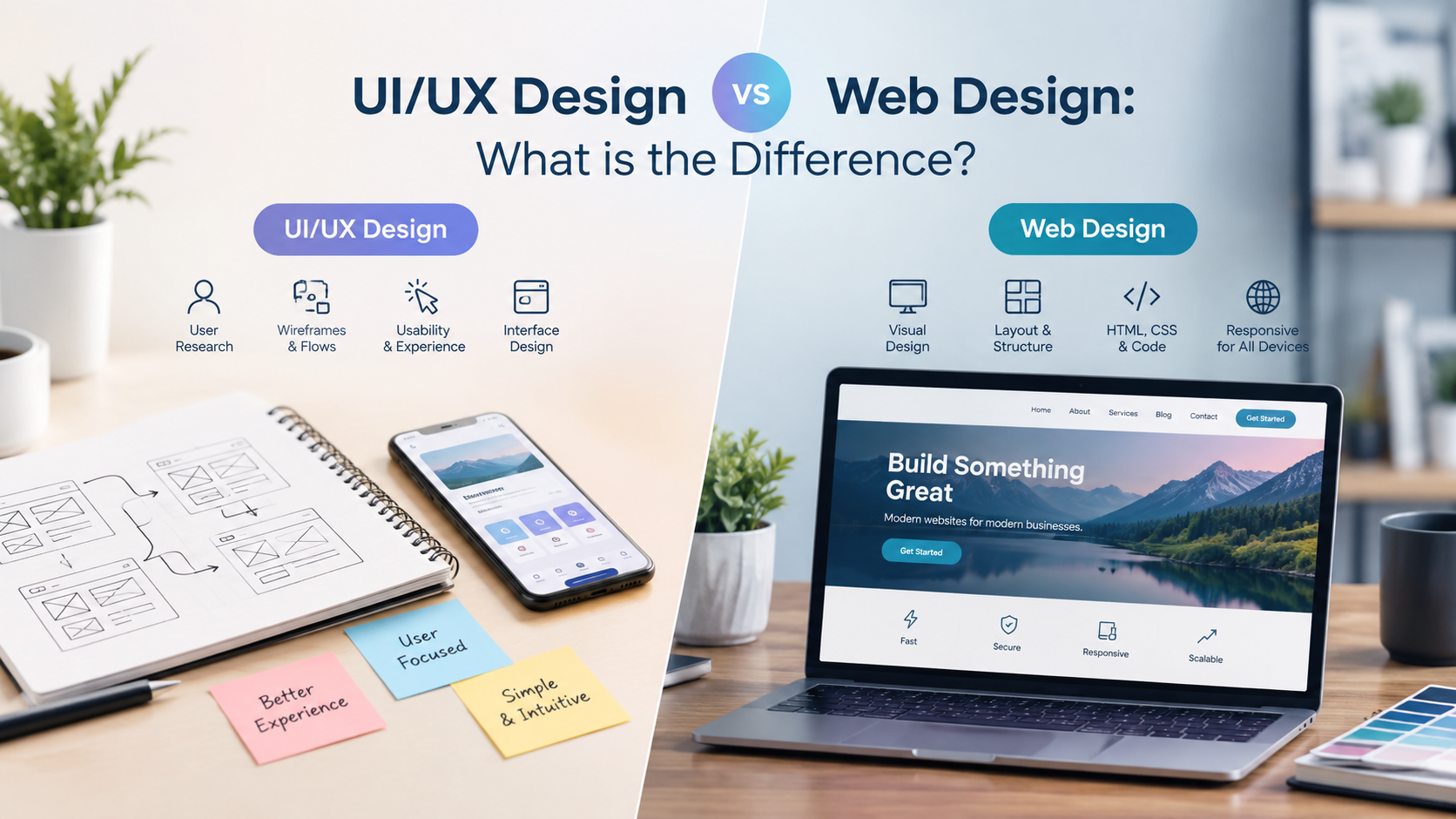
UI/UX Design vs Web Design: What is the Difference?
Confused about UI/UX design vs web design? Discover the core differences, tools, workflows, comparison breakdown, and learn whether your business needs UI/UX design services or a web design agency.
Why the Line Between UI/UX Design and Web Design Got Blurred
If you have ever tried to hire a designer to build a digital product or revamp your company's online presence, you have likely encountered terms like UX Design, UI Design, and Web Design. Quite often, job postings, freelance portfolios, and agency websites treat them as interchangeable buzzwords.
You might hear someone say, "We need a web designer to fix our mobile app checkout flow," or "We hired a UX designer to paint our website landing page."
While all three disciplines deal with creating digital interfaces, mixing them up can lead to missed expectations, misallocated budgets, and products that look visually stunning but fail to convert users—or vice versa.
- UX (User Experience) Design is about how a product works and feels to the user.
- UI (User Interface) Design is about how a product's screens look and interact.
- Web Design is about building and presenting layout and content specifically for web browsers.
This comprehensive guide breaks down the definitions, compares the core differences side-by-side, explains the distinct processes and deliverables, and helps you decide whether your business needs UI/UX design services, a specialized web design agency, or a full-service website development company in Mohali.
What is UX (User Experience) Design?
UX Design, or User Experience Design, is the process of researching, structuring, and optimizing how a user interacts with a product, system, or service to ensure it is intuitive, efficient, and satisfying.
UX design is fundamentally rooted in human psychology, user research, data analysis, and problem-solving. It is not limited to websites; UX principles apply to mobile apps, desktop software, smart devices (IoT), SaaS platforms, and even physical customer journeys.
Key Focus Areas of UX Design:
- User Research & Persona Building: Conducting interviews, surveys, and usability studies to understand target audience pain points, behaviors, and motivations.
- Information Architecture (IA): Organizing and structuring content logically so users can navigate without friction.
- User Journey & Flow Mapping: Architecting every step a user takes from their initial entry point to completing a specific task (e.g., signing up or purchasing a product).
- Wireframing & Prototyping: Creating low-fidelity structural blueprints to test concepts and flows before visual design begins.
- Usability Testing & Iteration: Observing real users interact with prototypes to identify bottlenecks, confusion, and drop-off points.
Real-World Analogy: Think of building a house. UX design is the structural architecture and floor plan. It determines where the doors and hallways are placed, how many rooms exist, and how easily a person can move from the garage to the kitchen without getting lost.
What is UI (User Interface) Design?
UI Design, or User Interface Design, is the practice of designing the specific visual elements, interactive components, and aesthetic presentation of a digital product's screen.
While UX focuses on logic and structure, UI focuses on visual hierarchy, brand representation, and emotional resonance. UI designers transform structural wireframes into high-fidelity, polished visual screens that users actually see and touch.
Key Focus Areas of UI Design:
- Visual Design & Branding Alignment: Establishing color palettes, typography, iconography, and visual imagery that reflect the brand's identity.
- Component Libraries & Design Systems: Crafting reusable UI elements such as buttons, form fields, cards, sliders, and navigation bars.
- Micro-Interactions & Animations: Designing hover states, button animations, loading indicators, and screen transitions that provide instant feedback to users.
- Visual Hierarchy: Arranging visual elements so the user's eye naturally focuses on key call-to-actions (CTAs) and primary content first.
- Responsive Layout Grids: Ensuring visual elements adapt seamlessly across mobile screens, tablets, laptops, and ultra-wide displays.
Real-World Analogy: Extending the house analogy, UI design is the interior styling and finishes. It includes the color of the paint on the walls, the style of the lighting fixtures, the material of the kitchen countertops, and the tactile feel of the door handles.
What is Web Design?
Web Design is a holistic discipline focused specifically on planning, creating, and updating websites that run inside web browsers.
Web design blends elements of UI visual design, content layout, and responsive web principles with a technical understanding of web standards (such as HTML, CSS, browser rendering engines, and Content Management Systems like WordPress or Webflow).
Unlike broader UX/UI designers who work across native mobile applications or enterprise software platforms, web designers operate strictly within the web ecosystem.
Key Focus Areas of Web Design:
- Web Layout & Page Structuring: Arranging headers, hero banners, content grids, footers, and sidebars specifically formatted for web viewing.
- Responsive & Adaptive Web Layouts: Designing flexible page layouts that reflow gracefully across desktop, tablet, and mobile web browsers.
- Web Aesthetics & Graphics: Crafting web graphics, banners, imagery, and typography optimized for fast web loading speeds.
- Front-End Familiarity (HTML/CSS): Understanding how web code structures layouts, ensuring designs can actually be rendered on modern browsers without performance drag.
- CMS Integration Readiness: Designing with content management platforms (such as WordPress, Shopify, or Webflow) in mind so content editors can update pages easily.
Real-World Analogy: Web design is like designing and building a specialized modular retail showroom. It must look inviting from the outside, display products clearly, fit within standard commercial zoning laws (web standards), and allow visitors to shop smoothly.
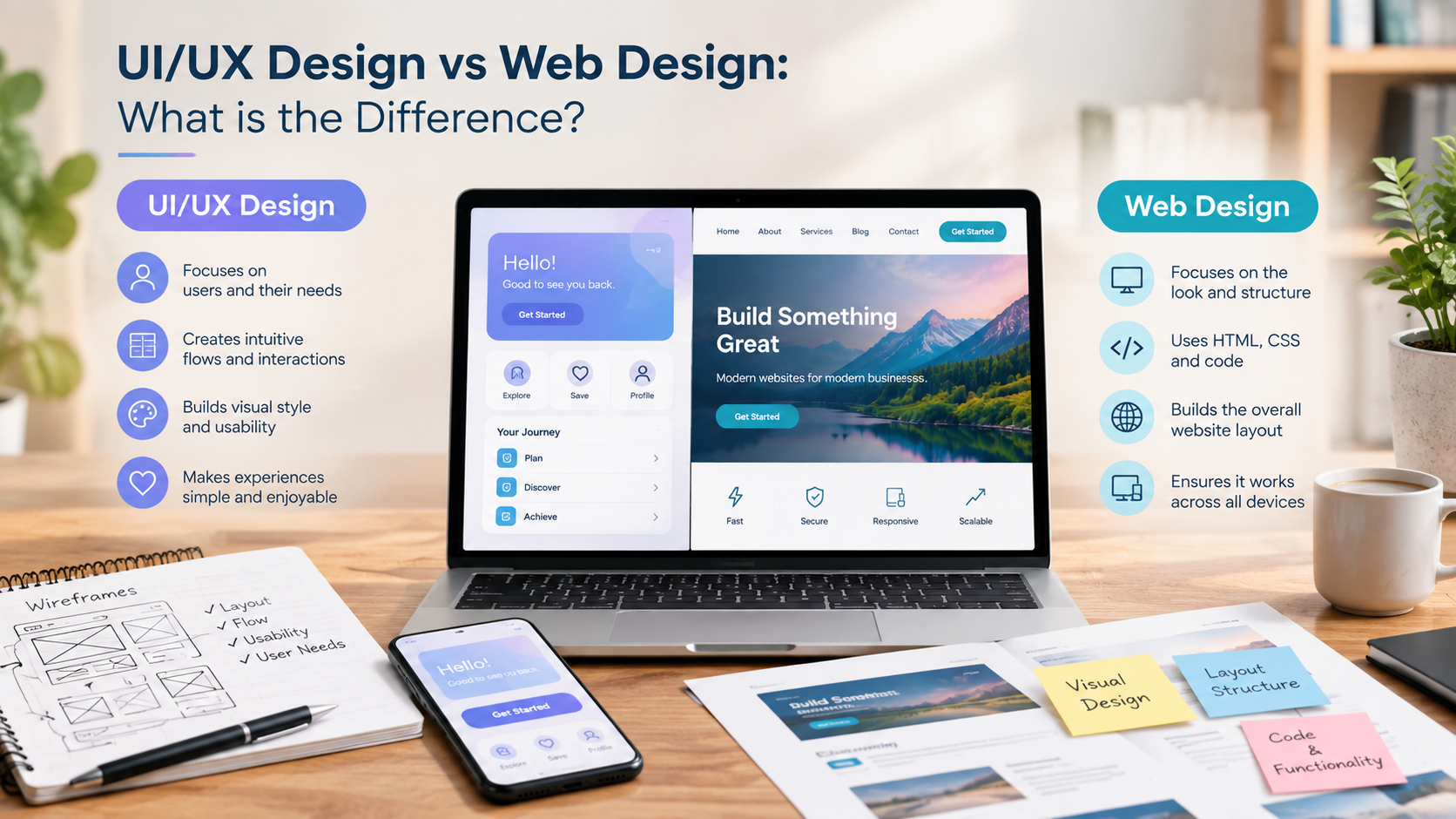
UI/UX Design vs Web Design: A Direct Side-by-Side Comparison
To quickly grasp how these fields differ across key criteria, review the comparison matrix below:
| Comparison Factor | UX Design | UI Design | Web Design |
|---|---|---|---|
| Primary Goal | Maximize usability, satisfaction, and task efficiency | Create appealing, visually clear, interactive screens | Create functional, attractive, responsive websites |
| Scope of Application | Websites, mobile apps, SaaS, IoT, software, physical products | Digital screens (Apps, SaaS, Websites, Dashboards) | Web browsers and websites exclusively |
| Core Mindset | Problem-solver, researcher, psychologist | Visual storyteller, artist, system thinker | Web visualizer, layout specialist, digital marketer |
| Key Deliverables | User personas, journey maps, wireframes, usability test reports | Design systems, high-fidelity mockups, UI kits, interactive prototypes | Web page designs, responsive templates, HTML/CSS assets |
| Primary Tools | Figma, Miro, FigJam, Axure, Maze, Hotjar | Figma, Adobe XD, Sketch, Illustrator, Framer | Figma, Adobe Photoshop/Illustrator, Webflow, WordPress, HTML/CSS |
| Coding Knowledge | Not required (Focuses on logic and user research) | Not required (Focuses on visual components & assets) | Highly beneficial (Understands HTML, CSS, JavaScript limits) |
| Success Metrics | Task completion rate, low drop-offs, high user retention | Visual consistency, brand alignment, interaction clarity | Page speed, responsive rendering, SEO layout, conversion rate |
The Core Differences Explained in Detail
Now that we have established basic definitions and a comparison matrix, let's explore the fundamental differences that distinguish UI/UX design from web design in real-world software and web development projects.
1. Ecosystem and Platform Scope
- Web Design is Platform-Bound: Web designers craft digital experiences exclusively for web browsers (Chrome, Safari, Edge, Firefox). Their focus is constrained by web protocols, search engine guidelines, URL structures, and web page performance metrics.
- UI/UX Design is Platform-Agnostic: UI/UX design spans any digital interface where humans interact with software. A UX designer might design an Apple Watch health tracking app, a Tesla dashboard touchscreen, a complex enterprise SaaS CRM, or a native Android app.
2. Analytical Problem Solving vs Visual Presentation
- UX Design Starts with "Why" and "How": UX design asks: Why are users failing to complete this checkout form? How can we reduce onboarding friction from 5 steps to 2 steps? What feature does the user need most right now?
- UI Design Asks "How Does It Look and Feel?": UI design asks: Does this button color contrast properly against the background? Is the typography scale legible on mobile screens? Does this micro-interaction feel smooth?
- Web Design Asks "How Does This Page Communicate and Render?": Web design asks: How does this landing page convey the company's message? Is the header responsive? Will this image heavy design slow down page loading times?
3. Technical Implementation and Coding Requirements
- Web Designers Often Build What They Design: In many agencies and small teams, a web designer not only designs page layouts but also implements them using HTML5, CSS3, Tailwind CSS, or CMS tools like WordPress and Webflow.
- UI/UX Designers Focus on Design Systems & Handoffs: UI/UX designers create comprehensive Figma component libraries, user flows, and design specs. They hand these assets off to front-end and back-end software engineers who handle the actual programming.
4. Data-Driven Research vs Graphic Aesthetics
- UX Relies on Empirical Data: A UX design workflow is heavily backed by quantitative analytics (Google Analytics, heatmaps, click maps) and qualitative data (user interviews, session recordings). Changes are driven by data, not personal taste.
- Web Design Balances Aesthetics with Conversion: Web design prioritizes brand identity, striking visuals, hero sections, and clear call-to-actions tailored for marketing, search engine optimization (SEO), and lead generation.
How UI/UX Design and Web Design Work Together in a Project
While these disciplines are distinct, they are not rivals—they are partners. The most successful digital platforms and websites emerge when UX research, UI craft, and web development principles work in harmony.
Here is how an end-to-end design and development workflow operates when building a modern web application or custom corporate website:
[Phase 1: UX Research & Strategy]
  ├── User Interviews & Competitor Analysis
  ├── Information Architecture & Sitemap
  └── User Flows & Low-Fidelity Wireframes
         │
         ▼
[Phase 2: UI Visual Design & Systems]
  ├── Color, Typography & Design Tokens
  ├── Component Library Creation (Figma)
  └── High-Fidelity UI Screens & Micro-Interactions
         │
         ▼
[Phase 3: Web Design & Front-End Build]
  ├── Responsive Web Layout Adaptations
  ├── HTML/CSS/JS or CMS Implementation
  └── Cross-Browser & Performance Optimization
         │
         ▼
[Phase 4: Testing & Iteration]
  ├── Usability & Accessibility Testing
└── Conversion Rate Optimization (CRO)- UX Phase (Discovery & Structure): The team researches the audience, creates user personas, maps user flows, and creates wireframes to ensure the user path is effortless.
- UI Phase (Visual Polish & Style): UI designers take the wireframes and apply color schemes, typography, brand assets, and interactive component states, turning blueprints into vibrant screens.
- Web Design & Development Phase (Implementation): Web designers and front-end developers translate the UI mockups into clean, responsive web code, ensuring fast load times, cross-browser compatibility, and seamless CMS integration.
- Iterative Optimization: After launch, real user data is collected to refine both the UX logic and UI visuals over time.
Which Service Does Your Business Need?
Knowing the distinction helps you invest your budget wisely. Depending on your current business goals, you may need dedicated UI/UX design services, a creative web design agency, or a full-service website development company in Mohali.
You Need Dedicated UI/UX Design Services If:
- You are building a SaaS platform, mobile app, or complex web portal with multi-step workflows.
- Your existing digital product has a high cart abandonment rate or user drop-off during onboarding.
- You need a standardized design system to scale across multiple internal software applications.
- Your primary goal is to solve user experience friction and improve user retention rates.
You Need a Specialized Web Design Agency If:
- You need a marketing-driven corporate website, portfolio, or landing page.
- You want to refresh your online brand identity and visual web presence.
- You need a site optimized for SEO, content publishing, and web lead generation.
- You want a site built on a CMS like WordPress or Shopify that your marketing team can update easily.
You Need a Full-Service Website Development Company in Mohali If:
- You want end-to-end execution combining UX research, custom UI design, custom front-end development, back-end engineering, and API integrations under one roof.
- You want to avoid miscommunications between separate design agencies and technical development teams.
- You require enterprise-grade performance, custom security features, scalable database architecture, and long-term ongoing maintenance.
Frequently Asked Questions (FAQs)
Yes, many experienced professionals hold hybrid skill sets. A seasoned designer might handle UX research, design stunning UI interfaces, and write clean HTML/CSS web code. However, on large-scale software projects, companies usually split these roles so specialists can focus deeply on their respective areas (e.g., dedicated UX researchers vs front-end developers).
Neither is more important because both depend on each other. A website with flawless UX logic but ugly visual UI will feel unprofessional and unorganized to visitors. Conversely, a website with breathtaking UI visuals but confusing UX navigation will frustrate users and fail to generate conversions. Great digital products require both.
UI/UX design directly dictates conversion rates. UX design ensures that the user journey toward conversion (like filling out a lead form or completing a purchase) is friction-free with minimum steps. UI design ensures that CTA buttons stand out visually, forms look inviting, and trust signals (like testimonials and badges) are placed strategically.
Generally, no. UI/UX designers primarily use design tools like Figma, Sketch, Adobe XD, and interactive prototyping platforms. However, having a foundational understanding of front-end web technologies (HTML, CSS, JavaScript) helps UI/UX designers create designs that are technically feasible and easy for developers to code.
Costs vary depending on scope, complexity, and team expertise:
- A basic marketing web design project typically ranges from ₹25,000 to ₹1,000,000 depending on page count and custom visual assets.
- Complete UI/UX design services for a custom mobile app or SaaS web product range from ₹75,000 to ₹5,000,000+, as it involves deep research, wireframing, interactive prototyping, and extensive design systems.
Partnering with an experienced website development company in Mohali provides cost-effective pricing while delivering world-class quality.
The Bottom Line
Understanding the distinction between UI/UX Design and Web Design is crucial for building digital products that succeed in today's competitive online landscape.
- UX Design crafts the logical strategy and effortless user journey.
- UI Design creates the visual beauty, interactive elements, and brand polish.
- Web Design brings visual layouts to life specifically for web browsers.
When these three disciplines align, your business gets more than just a good-looking website—you get a high-performing digital asset that engages visitors, solves user problems, and drives measurable business growth.
Transform Your Digital Experience with Bhanguz Software Solutions
Whether you need strategic UI/UX design services to revamp a complex SaaS product or a specialized web design agency to build a modern corporate website, Bhanguz Software Solutions Pvt. Ltd. is here to deliver.
As a leading website development company in Mohali with over 19 years of experience, our team of UX researchers, UI visual designers, and web developers build custom, scalable, and high-converting digital solutions for businesses across India and globally.
Ready to elevate your digital presence? Contact Bhanguz Software Solutions today to discuss your web design and UI/UX requirements.
Written by the team at Bhanguz Software Solutions Pvt. Ltd., a trusted web design agency, UI/UX design services provider, and custom website development company in Mohali with 19+ years of industry experience.
Related articles

Published June 11, 2026
How Bhanguz Builds Powerful Offshore Web Solutions Using MEAN, MERN, PHP & Flutter
 Author Name
4 min read

Published May 14, 2026
How Bhanguz Conducts Requirement Analysis for Every Project
Author Name
4 min read
